Provincial Rule Shifts Reshaping Mobile Access to Dealer Tables and Reel Spinners Through Secure Payment Channels
Carlo Washington · Aug 23, 2026
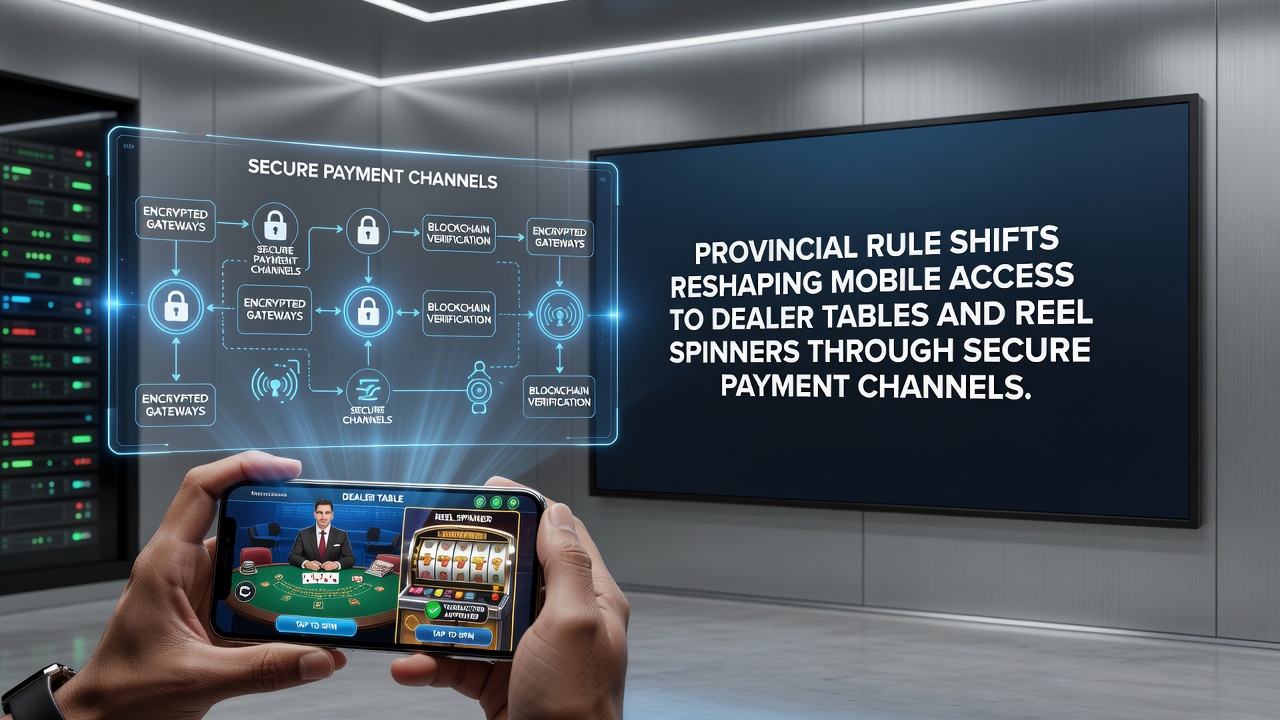
Provincial Rule Shifts Reshaping Mobile Access to Dealer Tables and Reel Spinners Through Secure Payment Channels
Provincial governments across Canada have introduced updated regulatory frameworks in 2026 that directly influence how players reach live dealer tables and reel spinners on mobile devices, and these adjustments center on verified payment channels that meet new security standards. Data from multiple provincial oversight bodies shows that operators must now integrate certified digital wallets and bank-grade encryption before offering real-money sessions, which has altered the onboarding process for thousands of accounts since the start of the year.
Key Provincial Adjustments Taking Effect
Ontario's Alcohol and Gaming Commission updated its mobile gaming directives in July 2026, requiring all licensed platforms to route payments through systems that undergo independent audits every quarter. British Columbia followed with similar measures in August 2026, mandating that reel spinner sessions and dealer table connections use tokenized transactions only. Alberta's gaming authority aligned its rules shortly after, focusing on cross-border verification protocols that confirm user location and payment source before any spin or wager begins.
These changes connect to broader efforts that standardize secure channels while maintaining provincial control over licensing. Observers note that platforms had to update their applications to support methods such as Interac e-Transfer and specific prepaid cards that carry built-in compliance features. Research from industry tracking firms indicates that compliance upgrades rolled out across major operators between March and August 2026, with most completing the necessary integrations ahead of the August deadlines.
Mobile Access Patterns After Implementation
Players who access dealer tables and reel spinners through approved mobile apps now encounter additional verification steps at the payment stage, yet session continuity has remained stable according to platform reports. Secure channels filter transactions in real time, which reduces instances of declined deposits that previously interrupted play. Figures released by provincial regulators reveal that average session lengths for mobile users stayed consistent even as authentication layers increased, suggesting that the new systems integrate smoothly once initial setup completes.
One study compiled by a Canadian research consortium tracked user behavior across three provinces and found that adoption of the updated payment options reached 78 percent within the first month of enforcement. Reel spinner titles that support quick wallet links showed higher retention rates than those requiring manual entry of banking details, while dealer table environments benefited from the same streamlined authentication that keeps video streams uninterrupted during fund transfers.

Role of Certified Payment Providers
Secure payment channels now serve as the primary gateway between user accounts and game servers, and provincial rules require these providers to maintain separate licensing or certification from the gaming authorities themselves. This separation creates an additional layer of oversight that tracks every transaction tied to dealer tables or reel spinners. Operators that partner with already-certified processors report fewer delays when launching new mobile features because the payment infrastructure already satisfies core compliance requirements.
External data compiled by the Responsible Gambling Council shows that platforms using multi-factor payment authentication experienced a measurable drop in disputed transactions during the summer of 2026. Meanwhile, reports from the Nevada Gaming Control Board highlight parallel developments in other jurisdictions where similar payment standards produced consistent patterns of user migration toward verified channels.
Technical Requirements for Continued Access
Mobile applications must now embed real-time risk scoring that evaluates each payment attempt before connecting to either live dealer streams or automated reel spinner servers. Provincial guidelines specify minimum encryption levels and mandate that location services remain active throughout any funded session. Developers have responded by embedding these checks into the core app architecture rather than treating them as add-on modules, which keeps load times comparable to pre-regulation versions.
Those who have examined the rollout across multiple operators note that reel spinner games adapted faster because their shorter round cycles allow quicker testing of payment integration. Dealer table environments required more extensive coordination with streaming providers to ensure that video feeds do not lag when a deposit processes in the background. Both categories ultimately converged on the same certified payment libraries, which reduced long-term maintenance overhead.
Conclusion
Provincial rule shifts implemented through 2026 have established a clearer pathway for mobile access to dealer tables and reel spinners by anchoring every transaction to secure, audited payment channels. The resulting environment demands that operators maintain continuous compliance while still delivering uninterrupted play sessions. Data collected across affected provinces continues to show steady user engagement once the initial verification steps are completed, indicating that the regulatory focus on payment security has integrated into standard mobile operations without disrupting core gameplay.